


by Edoardo Giribaldi
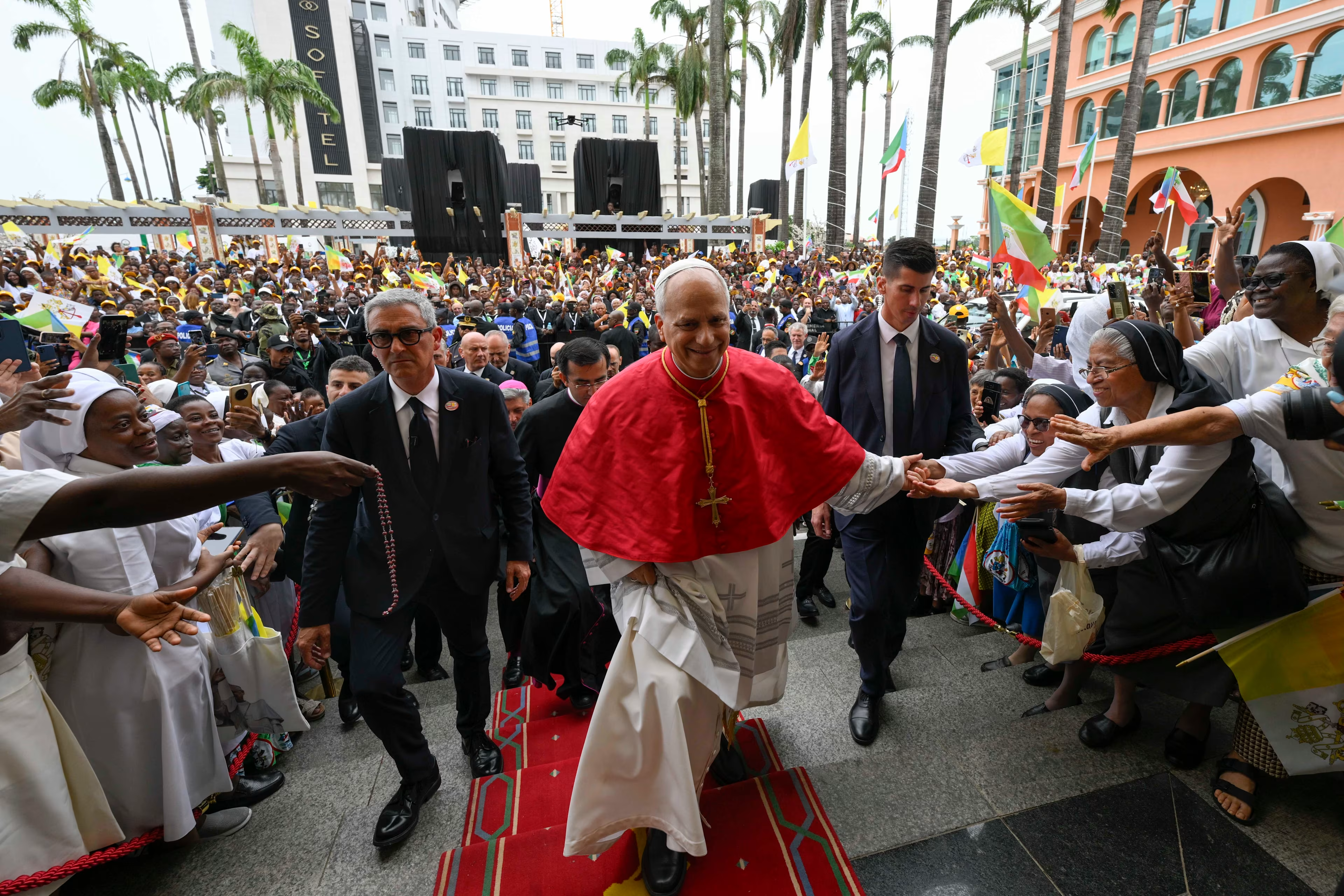
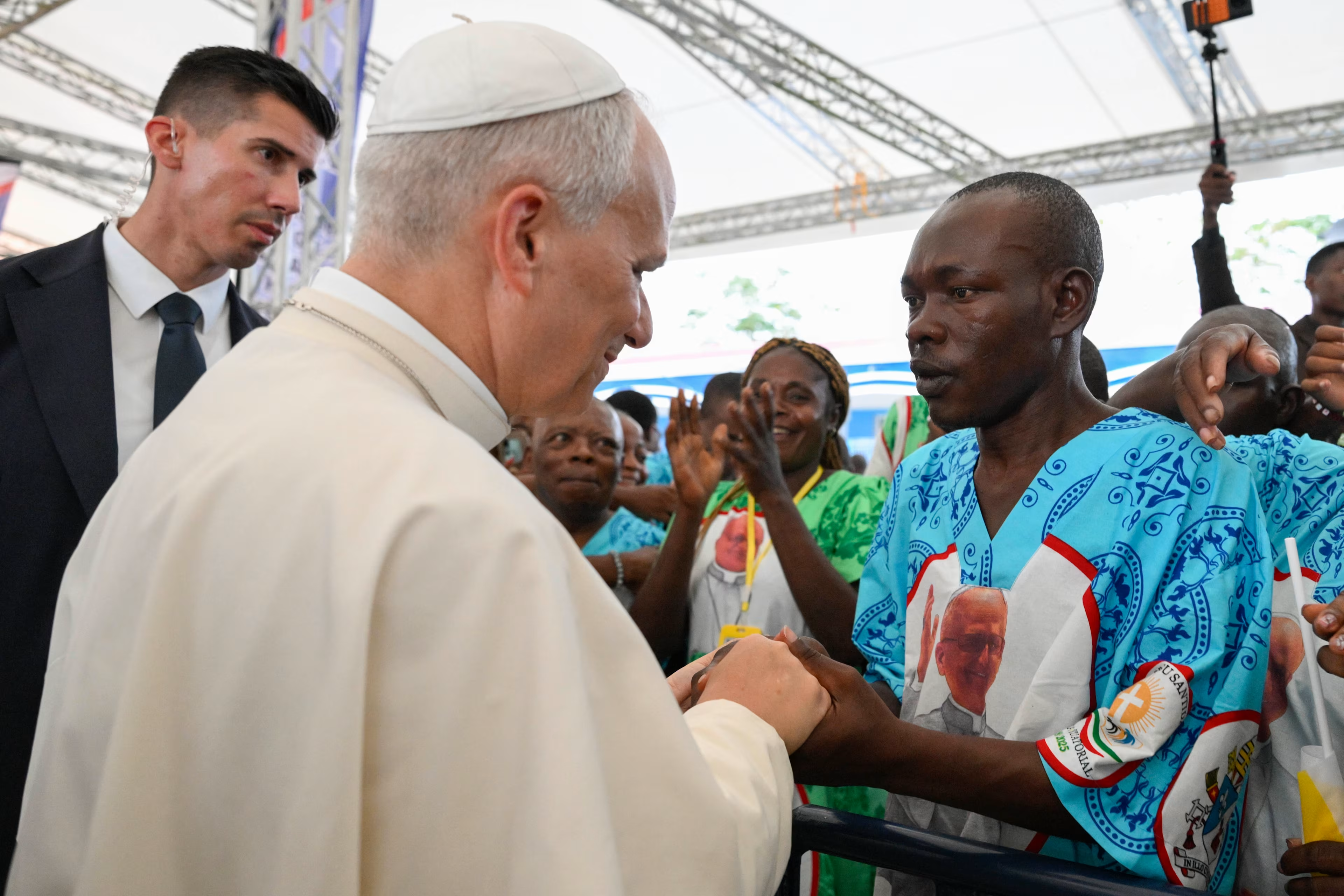
Pope Leo XIV meets with the academic community at the Catholic University of Central Africa in Yaoundé, Cameroon. Neither “material wealth” nor the “abundance of natural resources” measures the “greatness” of a nation, he says, pointing to the “dark side” in Africa of the devastation caused by the “frantic search for raw materials and rare earths” for technology. Science and faith can coexist, but competence must not be confused with passive adaptation to “dominant logic.”
Crossing the threshold of “new developments” is never neutral: it brings with it shadowy areas that, in Africa, become land and flesh, turning into “environmental and social devastation” in the frantic race for the raw materials that fuel the myth of technological progress. But when does this progress cease to be a promise? When does it silently become a form of “freedom” that fades away?
It happens when long-standing customs are abandoned—those “moral reference points” that once guided collective life and set ethical limits, now weakened by a superficial acceptance of “practices once considered unacceptable.”
On the afternoon of April 17 in Yaoundé, under the fading light over the Cameroonian capital, Pope Leo XIV addressed the academic world gathered at the Catholic University of Central Africa during his apostolic journey. His words were both invitation and warning: to dispel the illusion of conflict between science and faith, and to denounce the danger of knowledge that passively yields to “dominant logic.”
A Community of Life and Research
It is African youth—those in whom the Pope places hope to free the continent from “the scourge of corruption”—who welcome him. The university, founded in 1989 under the auspices of the Holy See, is, in his view, a beacon for both Africa and the Church.
“Today, more than ever, universities—especially Catholic ones—must become true communities of life and research, introducing students and faculty into a fraternity of knowledge.”
“Logos That Creates Dialogue”
The search for truth through study, the Pope says, is a joyful “communal experience,” one that Church teaching is called to promote in “generous and open synergy with all positive forces that foster the growth of universal human consciousness.”
This is a “culture of encounter,” where truth becomes “a logos that creates dialogue—and therefore communication and communion,” echoing Pope Francis and Benedict XVI.
“In a world where many are losing spiritual and ethical reference points, falling into individualism and superficiality, the university remains a place of friendship, cooperation, and interior reflection.”
The Gaze of Science Benefits from Faith
“All true principles come from God,” said St. John Henry Newman. Building on this, the Pope describes faith as a “gentle light” present in the material world.
“Faith illuminates matter, trusts in its order, and recognizes within it a path of harmony and understanding. The gaze of science benefits from faith, inviting openness to reality in all its richness.”
Faith, he adds, awakens critical thinking, preventing research from becoming complacent and instead opening reason to wonder.
The Beauty and Credibility of Faith
For a humanity “struggling to maintain hope,” Africa can be a horizon of renewal—open to interdisciplinary and intercultural perspectives that highlight the “beauty and credibility” of faith, especially in contexts marked by injustice and suffering.
Transforming Life
The greatness of a nation cannot be measured by resources alone. A society flourishes only when rooted in “upright consciences, educated in truth.”
“The formation of free and restless consciences is essential if faith is to transform individuals and society, inspire prophetic change, and encourage a deeper search for God.”
Erosion of Moral Reference Points
Modern societies—including Cameroon—are experiencing a loss of moral foundations, leading to the normalization of practices once considered unacceptable.
The Pope calls for careful discernment of the social, economic, and political forces shaping human behavior.
Do Not Look the Other Way
Christians must not fear new developments but become “pioneers of a new humanism,” especially in the digital age.
Africa, he notes, is more familiar with the “dark side” of this transformation—environmental and social damage driven by the extraction of resources.
“Do not look the other way. Without education, passive adaptation to dominant logic will be mistaken for competence, and the loss of freedom for progress.”
“You Are Real Persons!”
Addressing artificial intelligence, the Pope warns that technological systems can distort reality and reduce human relationships to functional exchanges.
“Dear friends, you are real persons! Creation has a body, a breath, a life that deserves to be heard and cared for.”
What Is at Stake
When simulation replaces reality, he warns, discernment weakens and society becomes fragmented.
“What is at stake is not simply the risk of error, but a transformation of our relationship with truth.”
Catholic universities must respond by forming leaders who act with integrity for the common good.
Faith and Reason Are Not Opposed
Speaking directly to young Cameroonians, the Pope encourages them to resist the temptation to seek their future elsewhere.
“I invite you to serve your country and use your knowledge for the good of your people.”
In Catholic universities—“born from the heart of the Church”—the search for truth is both intellectual and spiritual, grounded in the conviction that “faith and reason support one another.”
Academic Excellence and Human Integrity
Recalling the example of Fr. Barthélemy Nyom, the Pope urges educators to model justice, integrity, and service.
“By bearing witness to the truth, a context is created where academic excellence is naturally united with human integrity.”
Voices from the University
“The principal virtue of the academic community is humility,” the Pope concludes.
The university’s rector described his visit as an encouragement to continue forming Africa’s “dynamic youth,” who face significant social and economic challenges.
Students emphasized that education is both a privilege and a responsibility, calling for greater support so that financial barriers do not limit opportunity.
